
Training for Success: Mastering Knowledge Retention
Training That Sticks: Mastering Knowledge Retention for Lasting Success
In any fast-paced industry, information changes quickly, and employees need more than a single training session to stay proficient.
Ensuring knowledge retention is essential for building a skilled, confident workforce that can adapt to new tools, processes, and industry updates.
Effective knowledge retention goes beyond reading manuals or attending lectures. Employees need interactive, hands-on learning experiences that help them internalize key concepts. When team members can recall important procedures, best practices, or technical details, they transform from task-doers into trusted experts in their field.
Breaking training into bite-sized modules and incorporating repetition and practical exercises ensures employees retain knowledge longer and can apply it confidently. This approach enhances performance, supports employee development, and strengthens overall organizational expertise.
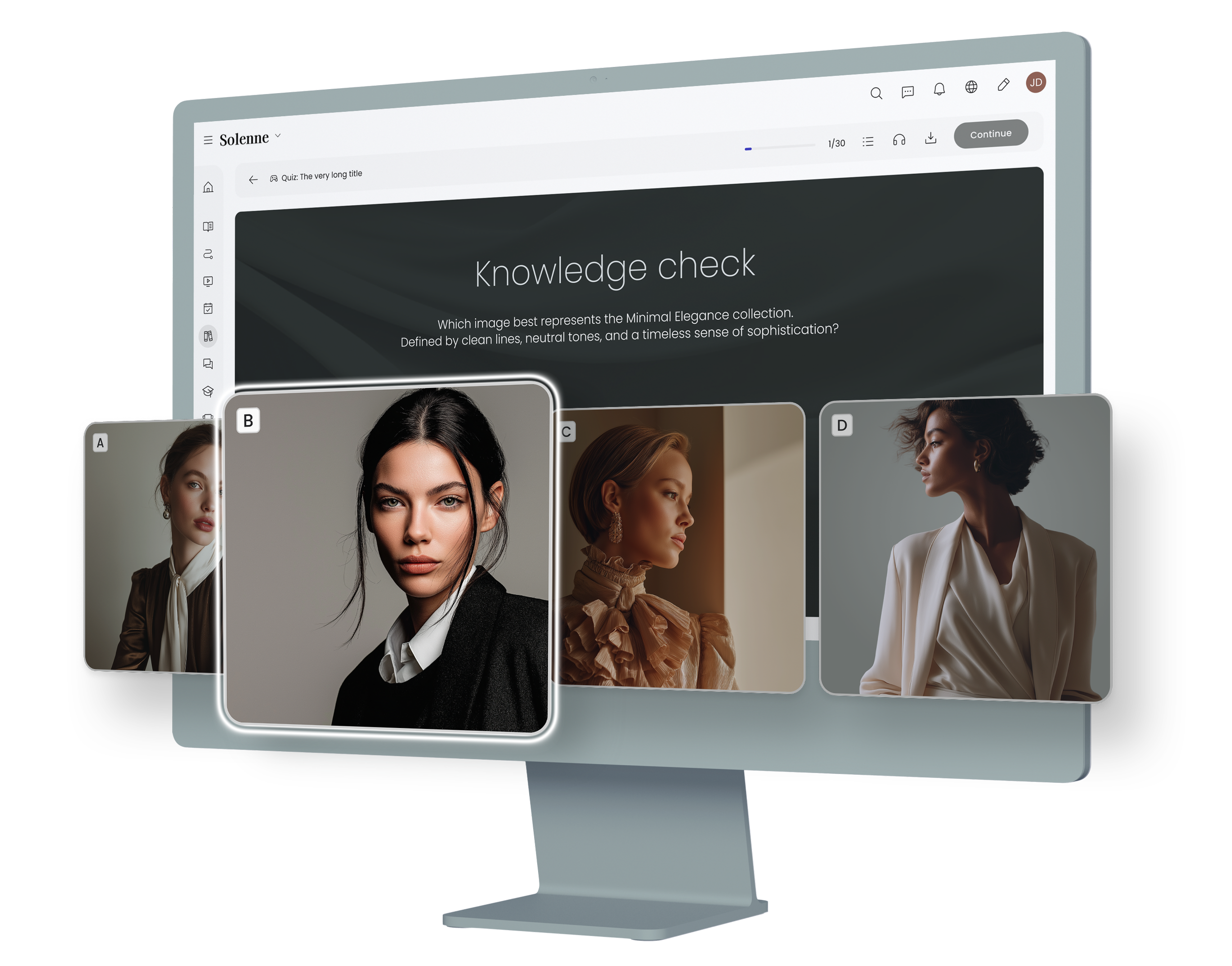
The Science of Memory: From Fading Facts to Lasting Expertise
In any fast-moving industry, knowledge can fade quickly if it is not reinforced effectively. Many traditional training programs fail because they overlook the natural tendency of the brain to forget information within a short period.
To turn short-term exposure to information into lasting expertise, learning must be interactive, engaging, and repeated over time. True mastery happens when employees move beyond memorizing procedures and begin to understand the principles and reasoning behind them.
By structuring information in layers and bite-sized modules, teams can overcome the initial overwhelm of new material and reach a level of fluency where they can confidently apply their knowledge, solve problems, and perform at their best. This approach supports effective learning, knowledge retention, and employee development while building a skilled, adaptable workforce.
Why Teams Forget and How to Fix It
To bridge the gap between “heard it once” and “know it by heart,” it helps to understand how the brain retains complex information:
Engage the Senses: Studies show that multisensory learning—engaging touch, sight, or even movement—can improve memory retention by up to 30% compared to reading or listening alone. Hands-on practice and real-world application turn information into experience that sticks.
The Rule of Three: Research suggests that learners need to encounter a new concept at least three times, ideally through different methods, to move it from short-term memory to long-term retention. Repetition across varied formats reinforces understanding and recall.
Microlearning Efficacy: Breaking longer training sessions into short, focused modules can boost concentration and increase long-term retention. For example, dividing a 30-minute lesson into three-minute segments can improve memory by 15–20%.
The Teaching Effect: Asking team members to “teach back” a concept to a colleague dramatically increases retention. Studies show that explaining what you’ve learned can boost memory recall to over 90%.
The Art of Learning by Doing: Why Teams Retain Knowledge Through Experience
In any fast-paced workplace, manuals and written instructions can explain procedures, but they rarely teach employees how to truly apply what they’ve learned.
Activity-based learning transforms traditional training by treating the work environment as a hands-on laboratory rather than a lecture hall. When team members engage in practical exercises—whether it’s performing simulations, role-playing client scenarios, or practicing technical tasks—the brain encodes information through multiple neural pathways.
This hands-on approach replaces passive observation with active experience, making skills intuitive and memorable. True expertise is built through repeated application and real-time problem-solving, not just reading documents.
Why "Doing" Outperforms "Reading" in Training
Shifting from passive learning to active participation dramatically improves how knowledge is stored and recalled:
Muscle Memory vs. Rote Memorization: Practicing a skill physically activates the brain in ways that reading alone cannot, making processes intuitive rather than memorized.
The 70-20-10 Principle: Research shows that 70% of learning comes from on-the-job experiences, 20% from feedback and coaching, and only 10% from formal coursework or reading.
Contextual Confidence: Employees who practice real-world scenarios during training are significantly more likely to perform confidently and accurately in actual tasks.
Safe Error Correction: Hands-on exercises allow for mistakes in a controlled environment. Correcting errors during practice prevents costly mistakes on the job later.
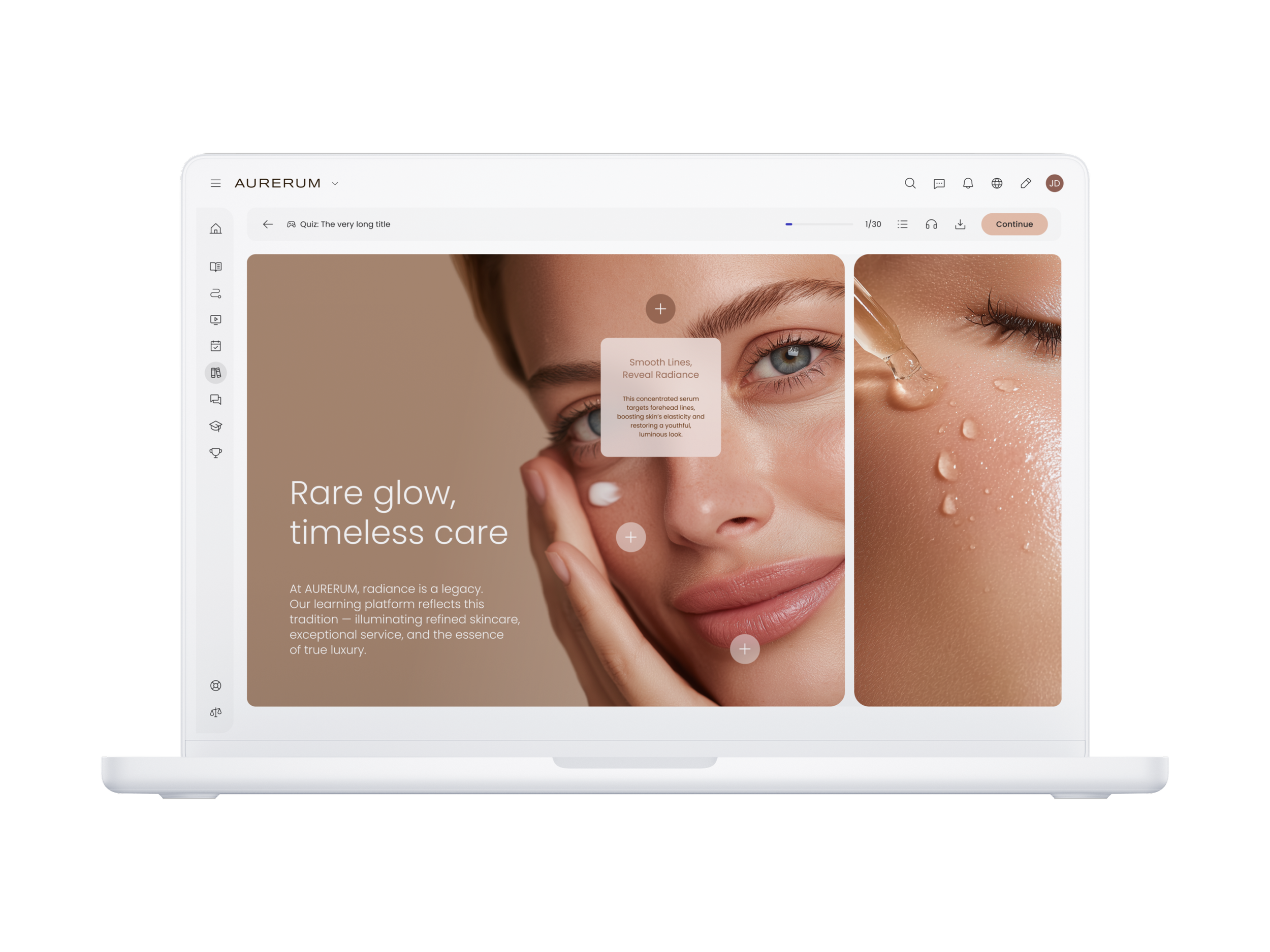
Choose Your Learning Adventure: Mastering Skills Through Branching Scenarios
In high-pressure work environments, every decision counts. Interactive branching scenarios replicate real-life situations by moving beyond linear “watch and learn” methods to an active “choose and see” experience.
Instead of being told what to do, employees make decisions in a virtual or simulated environment where their choices shape the outcome. Mistakes are immediate but risk-free, allowing learners to understand the consequences and refine their approach. By practicing in a safe setting, teams build confidence, sharpen decision-making, and develop the practical skills needed to succeed on the job.
The Science Behind Interactive Learning
Interactive training isn’t just engaging—it’s proven to improve knowledge retention and skill application:
Safe Failure: Scenario-based exercises let learners make mistakes without real-world consequences, reducing anxiety and improving confidence.
Active vs. Passive Learning: Requiring responses at regular intervals keeps participants engaged, leading to significantly higher attention and retention compared to traditional video or lecture formats.
Behavioral Change: Research shows that simulated decision-making increases on-the-job application of knowledge, as the brain encodes the experience like a real memory.
Personalized Learning Pace: Branching scenarios allow high performers to skip basics while providing extra guidance for those who need it, reducing time-to-competency and improving overall team performance.
The "Reel" Deal: Mastering Expertise Through Short-Form Video
In today’s fast-paced work environments, traditional long-form training can feel overwhelming.
InstaLearning, or short-form, video-first learning, leverages the same attention-grabbing techniques that make social media addictive but channels them into professional skill development.
By delivering complex concepts in 60-second bursts, organizations can reduce cognitive overload and make learning more digestible. This approach turns training from a daunting lecture into a scrollable series of tips, allowing employees to fit skill-building into small gaps in their day while ensuring knowledge stays top-of-mind.
Why Short-Form Video Works for Learning
Short-form video aligns with how the human brain processes and retains information:
The 90-Second Sweet Spot: Attention drops sharply after two minutes. Training clips under 90 seconds see significantly higher completion rates and better retention.
Visual Encoding: The brain processes visual content far faster than text. Demonstrating procedures or workflows visually helps employees remember concepts more effectively than written instructions.
Just-in-Time Learning: InstaLearning allows employees to access targeted guidance exactly when they need it, boosting immediate confidence and performance.
Mobile-First Engagement: With many employees working on the floor or in the field, mobile-optimized InstaLearning increases voluntary engagement and ensures training is accessible anytime, anywhere.
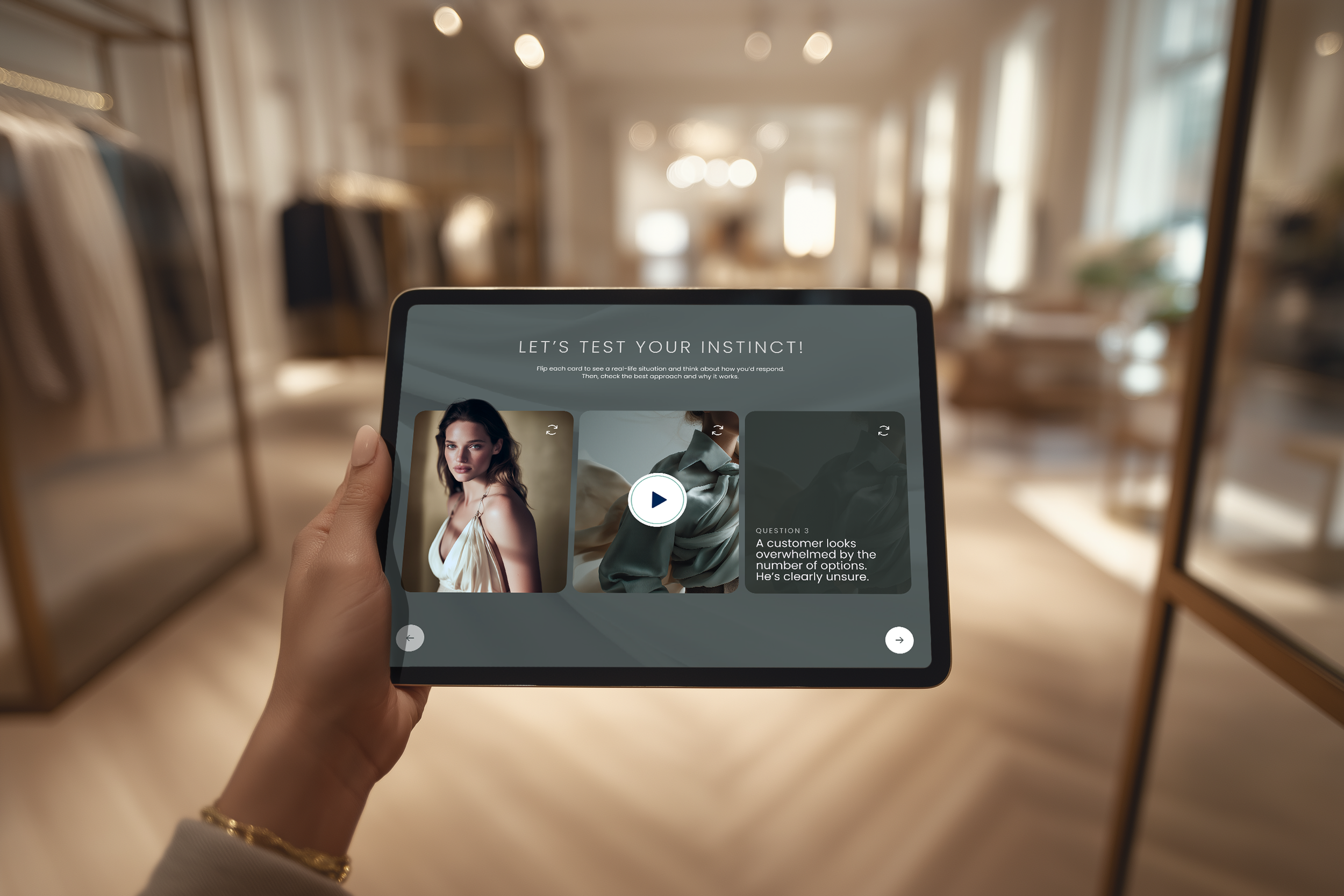
The Creator’s Edge: Mastering Skills Through User-Generated Challenges
In any professional environment, the best way to learn is by doing, not just observing.
User-generated content (UGC) challenges turn employees from passive learners into active creators, deepening understanding and retention.
By asking team members to create projects, simulate scenarios, or generate solutions, organizations tap into the Generation Effect, where people remember information they produce themselves far better than information they simply consume. These challenges encourage experimentation, problem-solving, and hands-on mastery in a risk-free environment.
When employees produce short, practical demonstrations—whether it’s a quick process walkthrough, a mini case study, or a skill demo—they are building personal expertise that directly translates into higher performance and confidence on the job.
The Science Behind Creative Retention
Shifting from “watching” to “doing” creates a significant leap in skill fluency and knowledge retention:
The Generation Effect: Research shows individuals are up to 40% more likely to remember information they create themselves versus information they passively consume.
Authentic Knowledge Application: Employees who actively create content develop genuine understanding and insight that scripted training cannot provide.
Peer-to-Peer Learning: Sharing user-generated projects fosters social learning, helping the entire team improve collectively. Studies suggest social learning contributes to roughly 20% of workplace knowledge acquisition.
Gamification & Motivation: Creative challenges trigger intrinsic rewards, boosting engagement and job satisfaction. Teams that participate in interactive, gamified training report higher motivation and a stronger sense of ownership over their skills.
The Heart of the Brand: Mastering Expertise Through Emotional Storytelling
In any competitive industry, products and services are more than their features—they represent a company’s mission, history, or innovative breakthroughs.
Storytelling in training moves beyond the “what” of a process to the emotional “why.” Humans are naturally wired to remember stories far more effectively than isolated facts.
By weaving a company’s origin, milestones, or real-world impact into training, organizations anchor technical knowledge in emotion. When employees share these stories, they aren’t just reciting information—they are transferring meaning. This emotional resonance creates lasting memory, deep engagement, and pride, transforming routine tasks into meaningful experiences.
The Science of Emotional Retention
Using narrative in training leverages episodic memory, which is more durable than rote memorization:
The Narrative Advantage: Hearing a story triggers the release of oxytocin, the “bonding chemical,” creating a psychological connection between employees, their work, and the organization.
Contextual Meaning: Facts are retained significantly better when presented as part of a larger narrative. Understanding the purpose behind a process or initiative makes it far more memorable.
Emotional Salience: Information tied to emotion—pride, excitement, or empathy—is encoded directly into long-term memory, bypassing the brain’s “filter” for forgettable details.
Employee Engagement & Retention: Staff who understand and internalize a company’s story show higher motivation, stronger loyalty, and a deeper sense of ownership over their work, improving overall retention and performance.

The Human Touch: Accelerating Mastery Through Direct Coaching
In any professional setting, the most sophisticated digital training cannot fully replace the nuance of real-time guidance.
Coaching and direct feedback act as high-performance activators, turning theoretical knowledge into polished, actionable skills.
Whether it’s correcting a procedural step, refining a workflow, or providing suggestions for problem-solving, human guidance gives employees the perspective they need to grow. Immediate feedback prevents bad habits from forming and develops the social and situational intelligence required to perform effectively in real-world scenarios.
The Impact of Real-Time Guidance
Research shows that while self-paced learning lays the foundation, live coaching drives high-performance results:
The 24-Hour Correction Window: Feedback delivered shortly after a behavior significantly increases retention. Real-time corrections make employees up to 80% more likely to adopt the correct technique permanently.
Closing the Skill-Will Gap: Coaching addresses not just what to do, but how to do it effectively. Personalized feedback is linked to measurable performance improvements, with teams showing up to 25% higher productivity than those relying on automated training alone.
Psychological Safety: Employees in strong coaching cultures feel supported and confident. They are more willing to take initiative, tackle complex tasks, and apply new skills without fear of failure.
The ROI of Mentorship: Organizations that prioritize direct feedback and mentorship see higher engagement, faster skill acquisition, and improved operational outcomes, as staff feel empowered and competent in their roles.
Conclusion: The Formula for Flawless Knowledge Retention
Mastering knowledge retention is not about how much information is delivered, but how it is absorbed and anchored.
In today’s dynamic workplaces, effective training must go beyond passive lectures or digital modules. By combining structured learning paths with hands-on challenges, experiential exercises, and storytelling, organizations move beyond memorization into true behavioral mastery. When employees are empowered to learn by doing and supported by real-time coaching, they develop the confidence and expertise to perform at a high level consistently.
Ultimately, teams that retain knowledge clearly and passionately transform everyday tasks into high-performance outcomes and deliver measurable impact.
The Mastery Blueprint: Key Takeaways
To ensure training translates into long-term results, focus on these proven pillars:
Layered Learning: Break training into microlearning bursts to reduce cognitive overload and improve retention.
Experiential Anchoring: Hands-on exercises, creative challenges, and simulation-based learning increase memory retention by 30–40%.
The Narrative Bridge: Facts alone are forgettable. Integrating stories and context makes information up to 22 times more memorable.
The Feedback Loop: Real-time coaching and mentorship accelerate skill mastery, turning new employees into confident performers up to 30% faster.